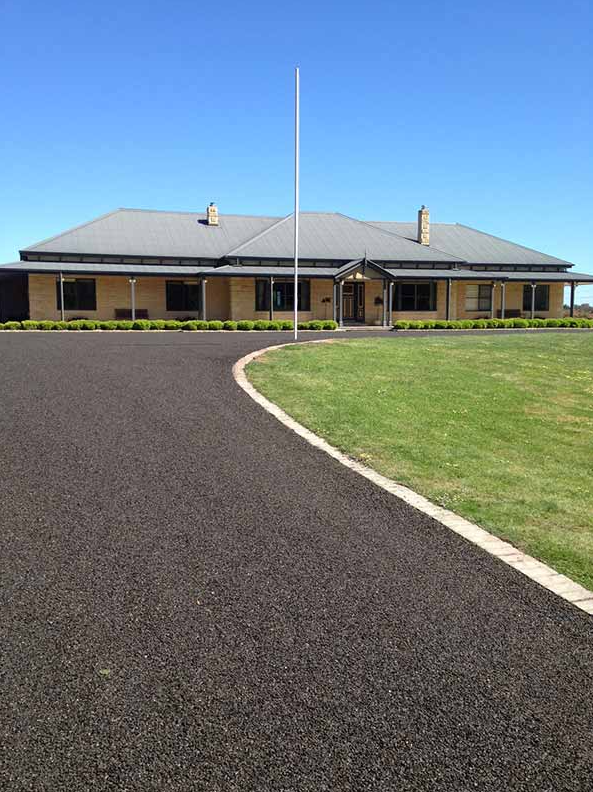
An asphalt driveway that once provided smooth, comfortable access can gradually become noticeably rougher. You may begin to feel more vibration through the vehicle, notice loose material on the surface or find that certain sections have developed dips, cracks and uneven patches. Because these changes usually happen slowly, it can be difficult to identify exactly when the driveway started deteriorating.
For property owners in Lara, VIC, increasing surface roughness is worth investigating rather than simply accepting it as part of an ageing driveway. Some changes are the result of ordinary surface wear, while others can indicate problems with drainage, pavement support or localised deterioration. Understanding the cause is the first step towards deciding whether maintenance, repairs or asphalt resurfacing is appropriate.
What Causes an Asphalt Driveway to Become Rough?
Asphalt is designed to provide a durable wearing surface, but it is continually exposed to vehicle traffic and environmental conditions. Over time, the surface can gradually lose some of its original consistency.
Several factors can contribute to increasing roughness, including:
- General surface ageing
- Loss of aggregate from the asphalt
- Repeated vehicle movements
- Cracking
- Pothole development
- Depressions and rutting
- Water penetration
- Deterioration around previous repairs
- Movement within the supporting pavement
The important point is that “rough asphalt” describes a symptom rather than a single problem. Identifying why the texture or levels have changed helps determine the most suitable response.
Normal Surface Ageing Can Change the Texture
As asphalt ages, the binder within the surface gradually changes through continued exposure to the environment.
The driveway may lose some of its original dark appearance and begin to feel slightly coarser. Small particles can become more visible, and the surface may no longer have the consistent finish it once had.
A change in appearance alone does not necessarily mean significant pavement failure has occurred. However, when increased roughness is accompanied by cracking, loose aggregate or deformation, closer inspection is advisable.
Aggregate May Be Starting to Work Loose
A noticeably coarse or gravelly surface can indicate that aggregate is beginning to loosen from the asphalt.
As the binder ages and the wearing surface deteriorates, individual particles may become dislodged by vehicle tyres. This can gradually expose more of the asphalt structure and create an increasingly irregular texture.
Look for loose material collecting:
- Along driveway edges
- Around parking areas
- Near turning points
- At the bottom of sloping sections
- Beside frequently travelled wheel paths
Increasing aggregate loss across a substantial area can indicate that deterioration is affecting the wearing surface rather than one isolated location.
Repeated Traffic Can Wear Some Areas Faster
Vehicle movements are rarely distributed evenly across a driveway.
Most vehicles follow similar wheel paths every day. Turning, braking and manoeuvring also concentrate forces in particular locations.
As a result, certain sections can deteriorate sooner than others.
Common high-wear areas include:
- Driveway entrances
- Turning positions
- Regular parking areas
- Narrow sections
- Frequently travelled wheel paths
If these areas are becoming rough while surrounding asphalt remains relatively sound, localised repair may be possible depending on the underlying condition.
Small Cracks Can Contribute to a Rougher Surface
Cracks interrupt the smoothness of asphalt and can gradually develop into more substantial defects.
More importantly, open cracks can provide pathways for water to enter the pavement. Once moisture reaches supporting materials underneath, the surface may begin moving or deteriorating around the affected area.
A driveway with numerous cracks may eventually develop uneven edges, loose material and localised depressions.
Pay Attention to Changes in the Cracking
Cracking deserves closer attention when:
- Cracks are becoming wider
- New cracks are appearing regularly
- Several cracks are connecting
- Material is breaking away around them
- The surrounding asphalt is becoming uneven
The extent and pattern of cracking can help indicate whether the problem remains superficial or may involve the pavement underneath.
Potholes Create Obvious Changes in Ride Quality
Even relatively small potholes can make an asphalt driveway feel significantly rougher.
A pothole forms when pavement material breaks away, leaving a depression or opening in the surface. Vehicle tyres repeatedly striking the damaged edges can loosen additional material, allowing the defect to expand.
Water collecting within the opening can contribute to further deterioration.
An isolated pothole may be suitable for targeted repair. If potholes are developing in several areas, however, the overall condition of the driveway should be considered.
Rutting and Depressions Can Develop Gradually
Not all roughness comes from the asphalt texture itself. Sometimes the entire surface profile has changed.
Wheel ruts, shallow depressions and settlement can make a driveway feel uneven even where the asphalt remains largely intact.
These changes may develop through repeated vehicle loading or movement within the supporting pavement.
Look at the Driveway After Rain
Wet weather can make these irregularities easier to identify.
If water begins collecting in wheel tracks or depressions where it previously drained away, the driveway levels may have changed.
This is useful information because it indicates that the problem involves more than appearance. The surface is also beginning to affect drainage.
Water Can Accelerate Asphalt Deterioration
Effective drainage is important to the performance of any pavement.
Rainfall should be able to move away from the driveway rather than remaining in low areas or entering through cracks and damaged sections.
When water penetrates the pavement, it can affect supporting materials underneath. If those layers lose stability, the asphalt above may begin cracking, deforming or breaking apart.
Signs that water may be contributing to deterioration include:
- Puddles remaining after rainfall
- Potholes repeatedly forming in the same area
- Soft or depressed sections
- Cracking around low points
- Edge erosion
- Increasing deformation
Correcting the visible surface without considering drainage can allow the same problem to return.
Previous Repairs Can Become Noticeable Over Time
A driveway that has received several repairs over its life may gradually develop an inconsistent driving surface.
Individual patches can remain functional while the surrounding asphalt continues ageing. Over time, transitions between original asphalt and repaired areas may become increasingly noticeable.
If there are only one or two isolated repairs, further local maintenance may remain practical.
If the driveway contains numerous patches and new deterioration continues developing between them, resurfacing the wider area may be worth considering.
Is the Problem at the Surface or Deeper Down?
This is one of the most important questions when deciding what to do with a rough asphalt driveway.
If deterioration is primarily limited to the upper asphalt layer and the supporting pavement remains stable, repairs or resurfacing may provide an effective solution.
If roughness is being caused by deeper pavement movement, simply adding new asphalt over the top may not address the underlying issue.
Potential signs of deeper problems include:
- Significant settlement
- Persistent soft spots
- Deep rutting
- Repeated failure in the same locations
- Large areas of deformation
- Severe cracking associated with movement
These areas may require additional pavement preparation before resurfacing.
When Are Localised Repairs Appropriate?
Not every rough driveway needs full resurfacing.
Targeted repairs may be appropriate when deterioration is limited to specific sections and most of the asphalt remains in serviceable condition.
This could include repairing:
- Individual potholes
- Damaged edges
- Small failed sections
- Localised depressions
- Isolated areas of deterioration
The condition surrounding the defect is important. Repairs are most useful when they address genuinely localised problems rather than repeatedly treating symptoms of widespread deterioration.
When Should Asphalt Resurfacing Be Considered?
Resurfacing becomes more relevant when deterioration affects a substantial proportion of the driveway but the underlying pavement remains suitable for continued use.
Signs that resurfacing may be worth assessing include:
- Widespread roughness
- Numerous cracks
- General surface deterioration
- Multiple older repairs
- Increasing aggregate loss
- An inconsistent driving surface
- Wear affecting most of the driveway
Asphalt resurfacing can renew the wearing layer and restore a more consistent surface without automatically requiring complete reconstruction of pavement layers that remain sound.
Preparation Is Critical
New asphalt should not simply be placed over existing problems.
Before resurfacing, failed sections may need repairing, levels may require correction and drainage should be checked. The existing pavement also needs to provide adequate support for the new surface.
Good preparation is fundamental to achieving a durable resurfacing result.
Why Waiting for Severe Failure Is Not Always the Best Approach
It can be tempting to continue using a rough driveway until potholes or major cracking make repairs unavoidable.
However, deterioration can become progressively more difficult to address as it extends into the pavement structure.
Having the driveway assessed earlier provides an opportunity to determine whether existing material and pavement layers can still be retained.
The aim is not to resurface asphalt simply because it looks older. It is to identify the point where continued deterioration is beginning to compromise the driveway’s function and where appropriate maintenance can protect the pavement from further decline.
Professional Asphalt Assessment in Lara, VIC
Two driveways can appear similarly rough while requiring completely different solutions. One may have an ageing wearing surface that is suitable for resurfacing, while another may contain localised pavement failures that need to be repaired first.
Lara Road Tech assesses asphalt driveways in Lara, VIC, with consideration for surface condition, pavement stability, drainage and the way the driveway is being used.
By identifying the cause of increasing roughness, an appropriate approach can be recommended, whether that involves targeted repairs, pavement preparation or asphalt resurfacing.
Conclusion
If your asphalt driveway feels rougher than it used to, the change may be caused by normal surface ageing, aggregate loss, cracking, potholes, rutting, drainage problems or movement within the pavement underneath. The extent and cause of the deterioration are more important than appearance alone.
Localised defects may only require targeted attention, while widespread surface wear can make asphalt resurfacing worth considering if the supporting pavement remains sound. Where deeper movement or drainage problems are present, these should be addressed as part of the preparation.
For asphalt driveways in Lara, VIC, Lara Road Tech can assess the existing pavement and determine what is causing the surface to deteriorate. If your driveway is becoming noticeably rough, uneven or increasingly difficult to maintain, arranging a professional assessment can help identify the most appropriate next step before the problem becomes more extensive.
Call us on: 03 4159 2883
Click here to find out more about Lara Road Tech
Click here to complete our contact form and see how we can help with your road needs.